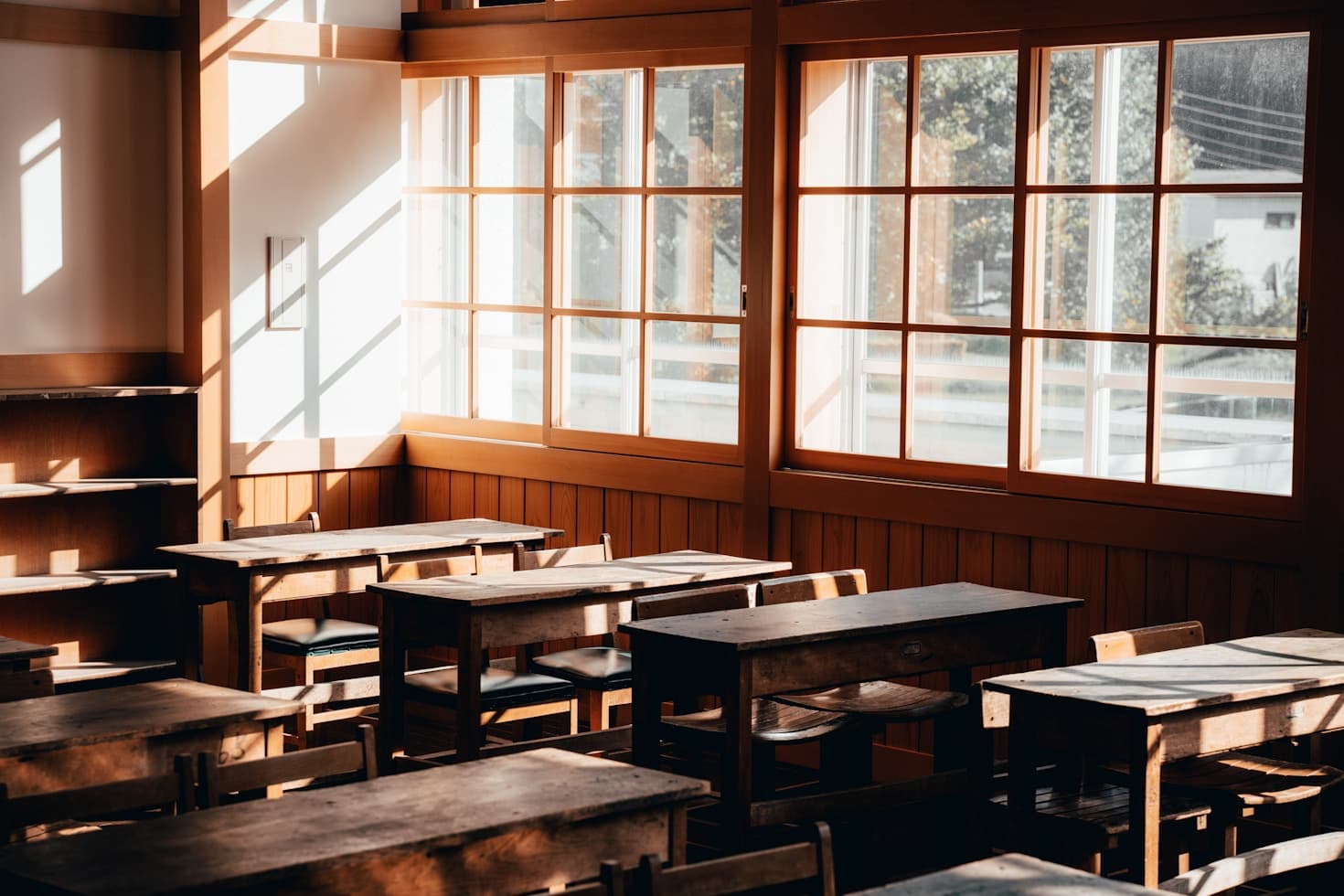
Our guide to schools in Karuizawa has always ended on the same honest note: there is no English-medium day school for primary-age children that also satisfies Japanese compulsory education. As of April 2026 that is no longer quite true. LCAきたかる森のインター初等部・プリスクール opened in Kitakaruizawa — an accredited Japanese elementary school where foreign teachers lead most lessons in English.
It is new, it is expensive, and it is not actually in Karuizawa. All three matter. Here is the honest picture.
Details below reflect what the school and its operator published as of August 2026. A school in its first year changes fast — confirm everything directly before making decisions.
TL;DR
- Opened April 2026 in the former Kitakaruizawa Elementary School building, Naganohara Town, Gunma.
- An Article 1 school (一条校) operating as a 教育課程特例校 — so it counts as compulsory education, unlike EtonHouse or ISAK.
- Foreign homeroom teachers, most subjects in English, target of CEFR B1 / EIKEN Grade 2 by graduation.
- ~15 students per class with three teachers — roughly a 1:5 ratio.
- Preschool ages 3–5 plus elementary, growing toward ~140 students.
- Premium fees: ¥240,000/month tuition, ¥600,000 entrance, ¥300,000 deposit.
- ~30 minutes by car from Karuizawa, at 1,100m — winter driving is a real factor.
Why this school is different
Nearly every English-medium school in Japan — including EtonHouse in Karuizawa and the schools in our national roundup — is registered as a miscellaneous school (各種学校). They are legitimate, well-run schools, but they sit outside Japan's formal school system. For Japanese citizens that means attending one does not discharge the compulsory-education obligation.
LCA Kitakaru is the other thing: a 一条校, approved by MEXT, additionally designated a 教育課程特例校, which is the mechanism that lets it depart from the standard curriculum enough to teach most of the day in English. Gunma Prefecture designated Naganohara a special zone for global education to make the school possible in the first place.
The practical consequence: your child can learn almost entirely in English and be enrolled in a recognised Japanese elementary school at the same time. For dual-national families, for Japanese families who want bilingual education without stepping outside the system, and for foreign families who expect to stay long-term, that combination is genuinely rare.
Where it is — and why that matters
The school occupies the building of the former Kitakaruizawa Elementary School, which closed in March 2024. The address is 〒377-1412 群馬県吾妻郡長野原町北軽井沢1924-44.
Read that carefully: Kitakaruizawa is in Gunma Prefecture, in Naganohara Town — not Karuizawa Town, Nagano. The name is geographic shorthand, not an administrative one. If you live in Karuizawa, this is a cross-prefecture commute, and none of it is arranged through Karuizawa Town Hall the way local public school enrollment is.
Access from Karuizawa:
- By car: about 30 minutes.
- By route bus: roughly 40 minutes from the north exit of JR Karuizawa Station, about ¥1,210.
- School bus: optional, ¥45,000 + tax per month.
Kitakaruizawa sits at roughly 1,100m elevation. Snow and frozen road surfaces are normal from November into April. A 30-minute drive in August is not the same drive in February — if you are planning a daily run, drive it in winter before you commit.
Ages, grades and the roll-out
Like EtonHouse, this school is being built out gradually rather than opening complete:
- Preschool — ages 3–5 (年少・年中・年長), in a combined multi-age class of about 15.
- Elementary — opened April 2026 with a combined Grade 1–2 class, growing toward Grades 1–6.
- Target size: roughly 140 students across preschool and elementary.
- Later: the operator has stated an intention to add a combined middle and high school in Kitakaruizawa.
As with any first-year school, check what is actually open for your child's year rather than what the plan describes.
How the English actually works
The school calls its method "active immersion": foreign teachers serve as homeroom teachers, and school life happens largely in English, with Japanese language taught as its own subject. The stated goal is CEFR B1 — roughly EIKEN Grade 2 — by the end of elementary school, which is conventionally a high-school-graduation benchmark in Japan.
That target is not invented for this campus. The operator's existing school has pursued the same benchmark for years (more on that below).
Structural details worth knowing:
- ~15 students per class with three teachers — about a 1:5 adult-to-child ratio.
- 40-minute periods rather than the standard 45.
- Preschool hours 8:40–15:30, with early-morning care and extended care to 17:30.
- After-school care until 17:30 is free for elementary students.
That last point is a genuine differentiator locally. EtonHouse's preschool day ends at 14:00, which is difficult for two working parents; free care to 17:30 is a different proposition entirely.
ふるさと科 and 生き方科
Two custom subjects sit alongside the national curriculum, and they tell you what kind of school this wants to be:
- ふるさと科 (hometown studies) — the surrounding town, its history, nature and people used as the learning field. In a village of 1,100m forest and volcanic landscape, this is less abstract than it sounds.
- 生き方科 (way-of-life studies) — dedicated time for children to reflect on who they are and where they are going, and to manage their own time.
The founder frames the whole thing around well-being and inclusive education — "no child left behind", self-affirmation before instruction. Whether that resonates or sounds soft is a matter of taste, but it is a coherent philosophy rather than marketing garnish, and it is the same one the operator has run for years elsewhere.
What it costs
Published for the 2027 intake:
| Item | Amount |
|---|---|
| Examination fee | ¥30,000 |
| Entrance fee | ¥600,000 |
| Security deposit | ¥300,000 |
| Tuition | ¥240,000 per month (includes materials, facilities, ICT, activities) |
| Lunch | ¥15,000 + tax per month |
| School bus (optional) | ¥45,000 + tax per month |
| After-school care (to 17:30) | Free |
Sibling discounts apply, and individual materials (art, calligraphy and sewing sets) are billed as needed.
Be clear-eyed about this number. If tuition is charged across twelve months, ¥240,000 a month is roughly ¥2.88M a year, and lunch adds about ¥180,000. First-year outlay, including the entrance fee and deposit, lands near ¥4M — before the bus. That is top-tier Tokyo pricing: comparable to the most expensive schools in our national comparison, and well above EtonHouse Karuizawa's ¥2.2M. The 1:5 staffing ratio explains a lot of it, but it does not make it cheap.
Admissions and the 2027 timeline
Three rounds, with an assessment and a family interview in each:
| Round | Applications | Interviews | Assessment |
|---|---|---|---|
| Round 1 | 15–30 June 2026 (closed) | 6–10 July 2026 | 20 July 2026 |
| Round 2 | 1–12 October 2026 | 19–23 October 2026 | 1 November 2026 |
| Round 3 | 5–7 January 2027 | 13–15 January 2027 | 24 January 2027 |
Round 2 is the next live window. Eligibility for the 2027 intake runs by birth date — Grade 1 for children born 2 April 2020 to 1 April 2021, with preschool P1–P3 covering births from April 2021 through April 2024. Places are capped at about 15 per division, so the practical constraint is capacity, not just assessment.
Who runs it
The operator is 株式会社エデューレエルシーエー (Eduré LCA), based in Sagamihara, Kanagawa. Its existing school, LCA国際小学校, was the first elementary school in Japan run by a joint-stock company, established through the structural-reform special-zone system — the same regulatory playbook now applied in Naganohara.
That history is the strongest evidence available about the new campus. LCA has been running English-immersion instruction inside 一条校 constraints for years, with the EIKEN Grade 2 target and its own teaching materials. Kitakaruizawa is a new site for a tested model, not a first attempt.
How it compares locally
| LCA Kitakaru | EtonHouse Karuizawa | Local public school | |
|---|---|---|---|
| Language | Mostly English | English | Japanese |
| Counts as compulsory education | Yes (一条校) | No | Yes |
| Ages | 3–5 + Grade 1 upward | 2–6 + Grade 1 upward | 6–15 |
| Annual cost | ~¥2.9M + fees | ~¥2.2M + tax | Effectively free |
| Location | Gunma, ~30 min drive | In Karuizawa | In your neighbourhood |
| Care until 17:30 | Free | Day ends 14:00 (preschool) | Varies |
For an English-medium education that keeps you inside the Japanese system, this is currently the only option in the Karuizawa area. For families who want immersion in Japanese, or who cannot justify ¥4M in year one, a local public school remains the sensible default — and it is what most resident families choose.
The honest trade-offs
- It is very new. The first cohort started in April 2026. There are no graduates, no track record at this site, and no parent community to ask yet.
- It is expensive — Tokyo-tier fees in rural Gunma.
- It is a commute, across a prefectural border, at altitude, through real winters.
- The upper grades do not exist yet. You are betting on the roll-out reaching your child's year.
- The model is proven, the campus is not. LCA's Sagamihara school is the evidence; this one has yet to produce any.
Against that: a 1:5 staffing ratio, free care to 17:30, a genuine bilingual pathway that keeps Japanese school records intact, and a class of fifteen in a forest. For the right family, that is a combination nothing else near Karuizawa offers.
How ERISA helps
A first-year school in another prefecture is exactly the situation where the paperwork gets confusing. ERISA (有限会社えり紗) can interpret at school tours, assessments and family interviews, translate application documents and school reports, and explain how enrolling in a 一条校 across the prefectural border interacts with your residence registration and your options back in Karuizawa. We can also help you weigh it honestly against local schools and EtonHouse — including the case for not choosing it.
Planning a move with school-age children? Start with Moving to Karuizawa, see the full Karuizawa Guide, or get in touch.